
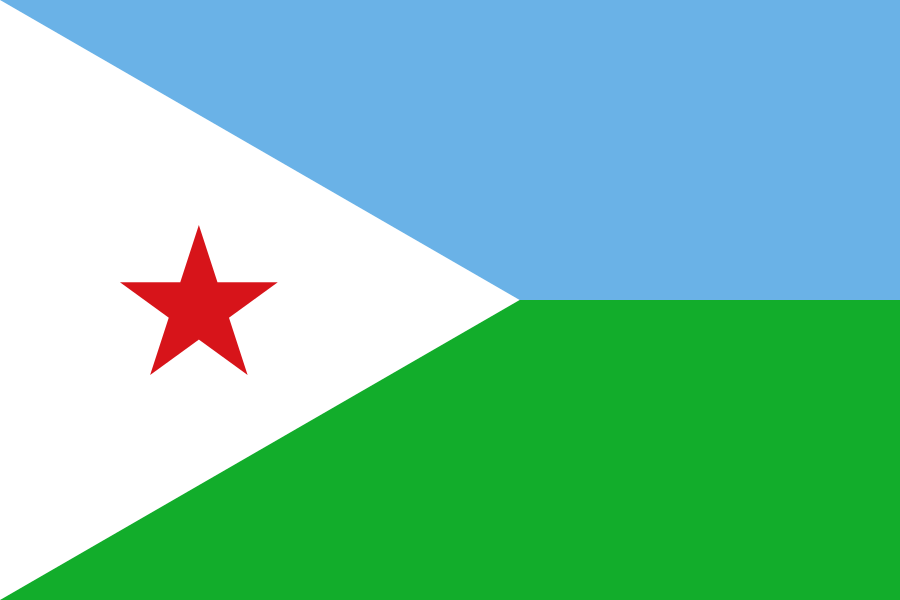
 Visa guide
Visa-free Countries for Djibouti Passport Holders
Every destination Djibouti can enter visa-free — visa-not-required, visa-on-arrival and eVisa options.
Visa not required countries for Djibouti passport holders
14 countries do not require Djibouti passport holders to obtain a visa before entering — you can travel on a valid passport alone.





Visa on arrival countries for Djibouti passport holders
27 countries let Djibouti passport holders pick up a visa at the port of entry. There is usually a fee at the immigration desk, though some countries issue it free of charge.






E-visa countries for Djibouti passport holders
39 countries require Djibouti passport holders to obtain an electronic visa (eVisa) online before they travel.









General visa requirements & things to know before you travel
A general checklist of what most countries ask for when Djibouti apply for a visa.
- A valid international travel passport
- A completed visa application form
- The applicable visa fee
- Evidence of permission to enter the destination country
- A photocopy of your passport data page
- Financial proof — an original bank statement
- A letter of invitation, where one is required
Exact requirements vary by destination and visa type — always confirm what your destination needs before you apply.
Visa information for other nationalities
Visa requirements for travellers from other countries visiting Djibouti.










About Djibouti
Djibouti is an Eastern African country located between Somalia and Eritea on the Horn of Africa. It is a country of dry shrublands and impressive desert landscapes. It is also home to one of the saltiest bodies of water in the world; Lake Ashal and is known generally for its excellent marine life. Its capital and largest city is Djibouti City.
Djibouti has a hot and humid climate and people here employ mostly light cotton fabrics as against anything heavy. It has a tropical desert climate on the coast and in the north and a semidesert climate in the south and central highlands. The country has low rainfall. The western culture of jeans and T-shirts has taken root and most Djiboutians wear them. It is therefore best for visitors to dress lightly in Djibouti.
Owing to Djibouti's strategic location which is a centre for trade and commerse, her culture is very much diversified. The two dominant ethnic groups in Djibouti are the Afar and the Issa (Somali). Somalis make up 55% of the Djibouti population whilst Afars make up 35% of the Djibouti population. The country is 94% Muslim and 3% Christian. The Djiboutians are not known to be a people of handcrafts but employ music and oral literature. Some musical instruments used by them are oud, bowl lyre, and tambura.
Djiboutians are primarily a nomadic people and so their food is largely made up of dairy products and meat gotten from the animals they herd. Djiboutian cousine also features a lot of grains. Foods in Djibouti cities are largely influenced by Italian and European foods. Djiboutians are known to consume qat, a narcotic leaf imported in bulk from Ethiopia.
Some fascinating tourist locations in Djibouti are:
- Djibouti City: This is the very lively capital of Djibouti. It is the best place to experience the hustle and bustle of modern life against the backdrop of old architecture dating back to the colonial era, sandy beaches, and lively markets. With its very Arabic vibe, it is the cultural and historical centre of Djibouti.
- Khor Ambado Beach: This is a very serene beach in Tadjoura Bay offering a wonderful swimming and snorkeling experience and respite from the hot Djibouti days in its cool waters.
- Day Forest National Park: This "forest" died quite a while ago probably due to drought. However, the area boasts a range of spectacular mountains, a beautiful landscape for hiking, great facilities at the camp, and great food.
- Lake Ashal: The lake Ashal has water so salty that one floats upon it. It provides a natural spa experience in its beautiful waters and is the lowest point in Africa, being 570 feet below sea.
- Tadjoura City: This is the perfect retreat. It is one of the oldest towns in Djibouti and is ideal for activities like fishing, swimming and sight seeing all at a very laid back, relaxed pace.
There are several interesting facts about this country. For one, Djibouti is 90% desert land. Her major exports are hides, skins, and coffee.
There are a range of hotels in Djibouti that you can use depending on your budget.