
 Visa guide
Visa-free Countries for Benin Passport Holders
Every destination Beninese can enter visa-free — visa-not-required, visa-on-arrival and eVisa options.
Visa not required countries for Beninese passport holders
7 countries do not require Beninese passport holders to obtain a visa before entering — you can travel on a valid passport alone.

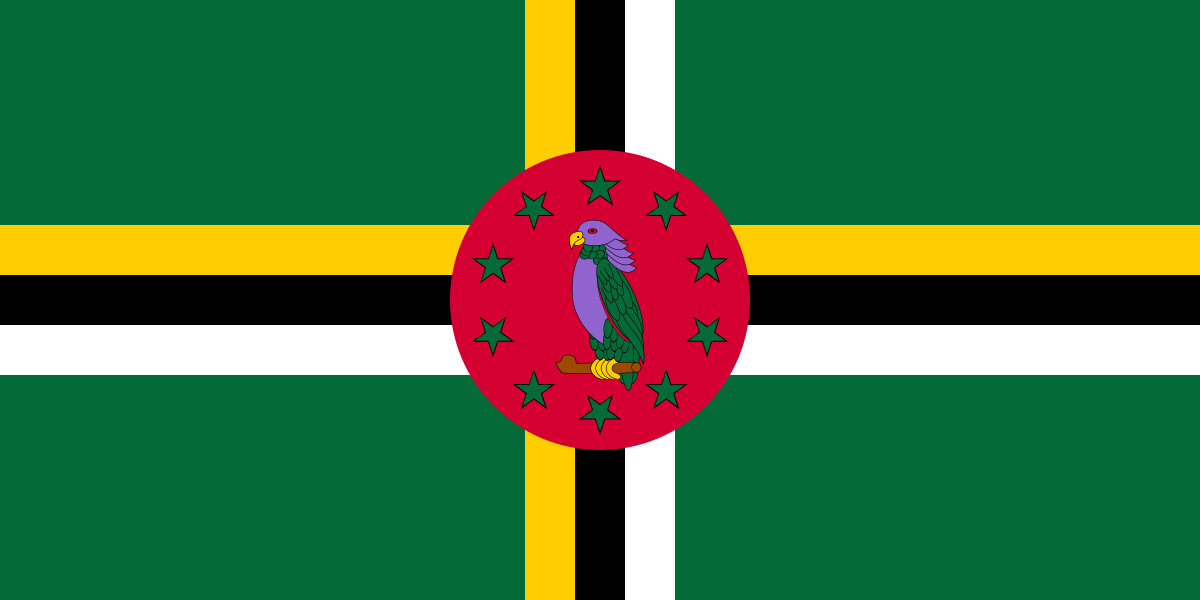


Visa on arrival countries for Beninese passport holders
6 countries let Beninese passport holders pick up a visa at the port of entry. There is usually a fee at the immigration desk, though some countries issue it free of charge.


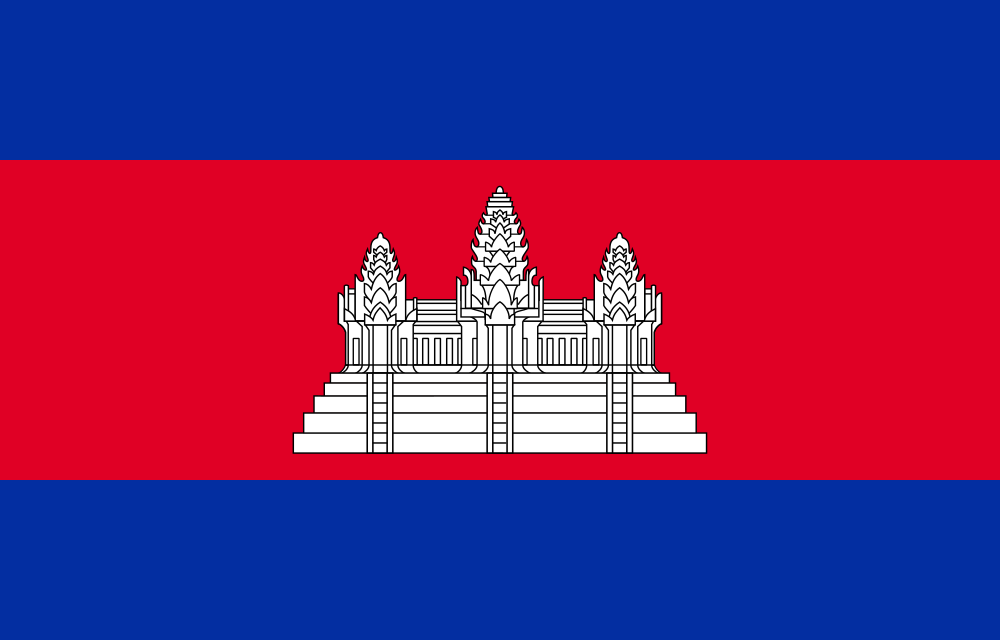
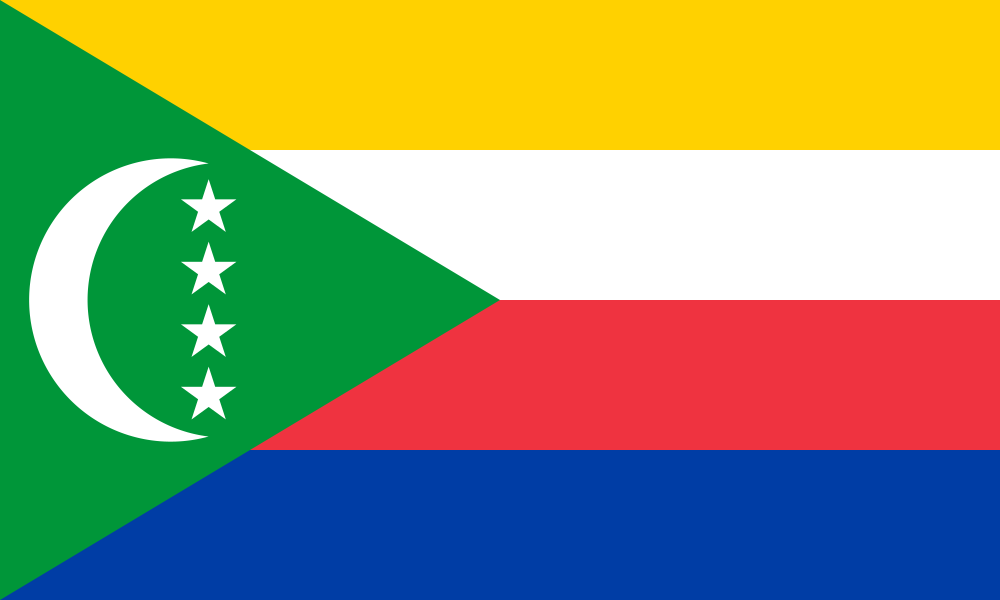
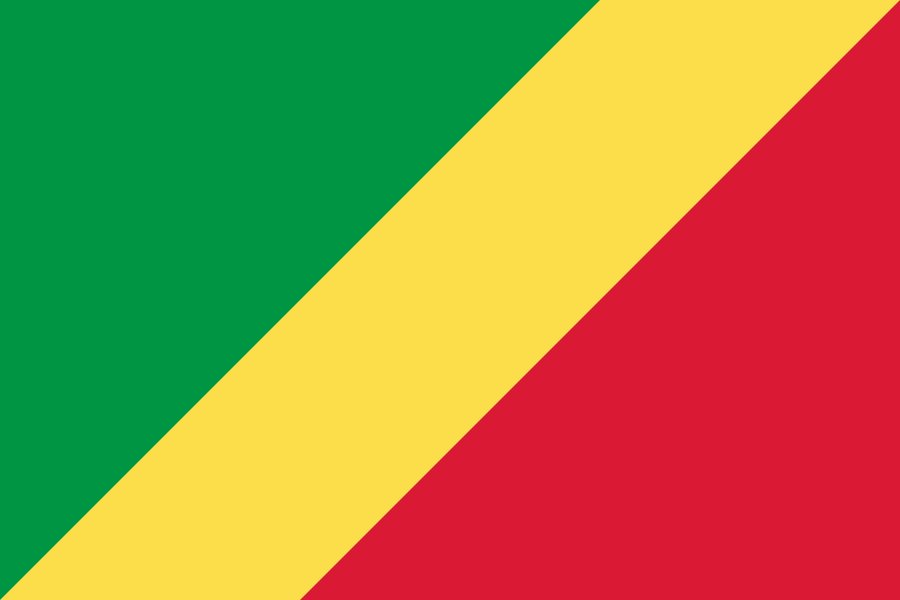

E-visa countries for Beninese passport holders
5 countries require Beninese passport holders to obtain an electronic visa (eVisa) online before they travel.

General visa requirements & things to know before you travel
A general checklist of what most countries ask for when Beninese apply for a visa.
- A valid international travel passport
- A completed visa application form
- The applicable visa fee
- Evidence of permission to enter the destination country
- A photocopy of your passport data page
- Financial proof — an original bank statement
- A letter of invitation, where one is required
Exact requirements vary by destination and visa type — always confirm what your destination needs before you apply.
Visa information for other nationalities
Visa requirements for travellers from other countries visiting Benin.












About Benin
The capital of Benin is in the city of Porto-Novo. The peak travel time to Benin is during the dry season, from October to February, when the rains are ending and the temperature is moderate. The other climate season in Benin is the rainy season from the months of April to September, It is best not to travel during these months because the weather is usually unstable and the sea is rough. Benin is home to about 20 ethnic groups, with the 4 largest ethnic groups being the Fon, Adja, Yoruba and the Bariba. As a culturally diverse country, the people of Benin are a diverse mix of Christians, Muslims, and Voduns (the West African traditional believers). The cuisine of Benin is famous for its exotic ingredients and flavorful dishes, it’s most popular meals are maize, rice, beans and yam with peanut or tomato based sauces. There are 50 indigenous languages in Benin, with French being the official language. You will also hear Fon and Yoruba commonly spoken by the locals.
You can get around Benin quite easily by air due to its small size. Roads in Benin are in poor condition and often difficult to get through during the rainy season. While many of the main streets in Cotonou are paved, side streets in the city are mostly riddled with potholes. For transportation within the cities of Benin, you can rely on bicycles, mopeds, motor bikes, public buses and moped taxis. Petty crimes like mugging, pick pocketing and carjacking are common in Benin. It is advisable that travellers avoid walking alone in the poorly lit streets of Cotonou as street robbery is prevalent.
Benin is home to pristine beaches, beautiful wildlife and exquisite national parks. You can explore Cotonou, the mildly chaotic yet vibrant commercial hub of Benin. The laidback capital of Porto Novo offers a lagoon-side location getaway, palm-fringed Atlantic beaches and museums. Benin has a rich and vibrant culture which influences the lives of the locals largely. Most of its festivals are linked to its culture, they include: the Voodoo Day, the Quintessence Film Festival, Gelede Festival which honors mothers in the community and pays respect to the female elders. You should go and experience the Waba Festival in the galleries in Porto Novo and Cotonou, or the International Festival of the Dahomean Cultures in Abomey.
If you are ever in Benin, there are a lot of places of interest to see and things to do in this country. The excitement that comes with these places will make you never want to go home, they include the:
Pendjari National Park, which is a home to a vast number of wildlife, like the buffaloes, antelopes, West African lions, elephants, and birds among others. You can enjoy quality time at this park if you visit via the hills and cliffs of the Atakora range, which provide a scenic and wonderful backdrop of the park.
The Royal Palaces of Abomey which are 12 palaces spread over 20 hectares or 99 acres of land and lived in by 12 kings. The kingdom was founded by the Fon people in 1625, and it rose to become a powerful and commercial empire.
The Royal Palace, Porto-Novo, also known as King Toffa’s Palace. It is the former residence of the king, but which is now converted to a museum and named the Musee Honme. Most of the artifacts in the museum are related to the times of the former dynasties and tell a lot about the cultural past of the Beninoise.
Bab’s Dock, a private lake with indescribable beautiful open lake with a breathtaking sight. You can drive through the beautiful mangrove where you can explore the wildlife. You can seat, relax and be at one with nature or take on sport activities such as Kayaking or playing Volley Ball here. There is also a small restaurant making very delicious local and continental dishes.
The Artisanal Center is a great place to visit if you are interested in checking and purchasing arts and crafts unique to Benin. The center has multiple spaces built with an African architectural design. Each spaces has specific craftsmen selling goods or sometimes making goods to be sold.
For the tourist wanting to explore the uniqueness of Benin, there are a variety of hotels and apartments to stay in. You will have an infinite amount of choices to pick from according to your budget.